
Sharpening Stone Angle Guide: Achieving Razor Sharpness
Unlocking a blade’s full potential demands precision; mastering sharpening angles is crucial for exceptional performance and lasting sharpness, guaranteeing optimal cutting efficiency.
Sharpening, at its core, is the art of removing microscopic metal from a blade’s edge to restore its cutting ability. But it’s not simply about abrasion; it’s about controlled abrasion. The angle at which you sharpen dictates the resulting edge geometry, profoundly impacting the blade’s performance. A correct angle creates a durable, effective edge, while an incorrect one leads to a weak, quickly-dulling blade.
Think of it like this: a shallow angle creates a very acute, delicate edge – excellent for slicing but prone to chipping. A steeper angle produces a more robust, durable edge, ideal for heavier tasks but less refined for precision work. Understanding this relationship is the first step towards achieving consistently sharp results. This guide will delve into the nuances of sharpening angles, equipping you with the knowledge to confidently tackle any blade.

Why Stone Angle Matters
The sharpening angle fundamentally influences two critical aspects of a blade’s performance: edge durability and cutting efficiency. A smaller angle creates a thinner, sharper edge, minimizing resistance during slicing motions. However, this delicate edge is more susceptible to rolling or chipping under stress. Conversely, a larger angle forms a thicker, more robust edge, better suited for tasks involving impact or tougher materials, but with reduced initial sharpness.
Maintaining a consistent angle throughout the sharpening process is paramount. Variations result in an uneven edge, diminishing performance and accelerating dulling. Imagine a saw with teeth of differing lengths – it won’t cut smoothly! The angle determines how much metal is removed and how the edge is shaped, directly impacting its ability to cleanly sever materials. Therefore, mastering angle control is not merely a technique, but a foundational principle of effective sharpening.
Understanding Blade Geometry
Blade geometry encompasses several key features impacting sharpening: the bevel (the angled surface leading to the edge), the edge profile (the shape of the cutting edge – convex, flat, or concave), and the overall blade thickness. Different blade types are designed with specific geometries tailored to their intended purpose. For instance, a chef’s knife typically features a curved blade and a relatively thin bevel for rocking motions and efficient slicing.
Recognizing these geometric characteristics is crucial for selecting the appropriate sharpening angle. A blade with a thinner profile generally requires a smaller angle, while a thicker, heavier blade benefits from a larger angle. Understanding the existing bevel angle also helps in replicating it during sharpening, preserving the blade’s original performance characteristics. Ignoring blade geometry can lead to an improperly sharpened edge, compromising its functionality and potentially damaging the blade itself.
Essential Tools for Angle Control
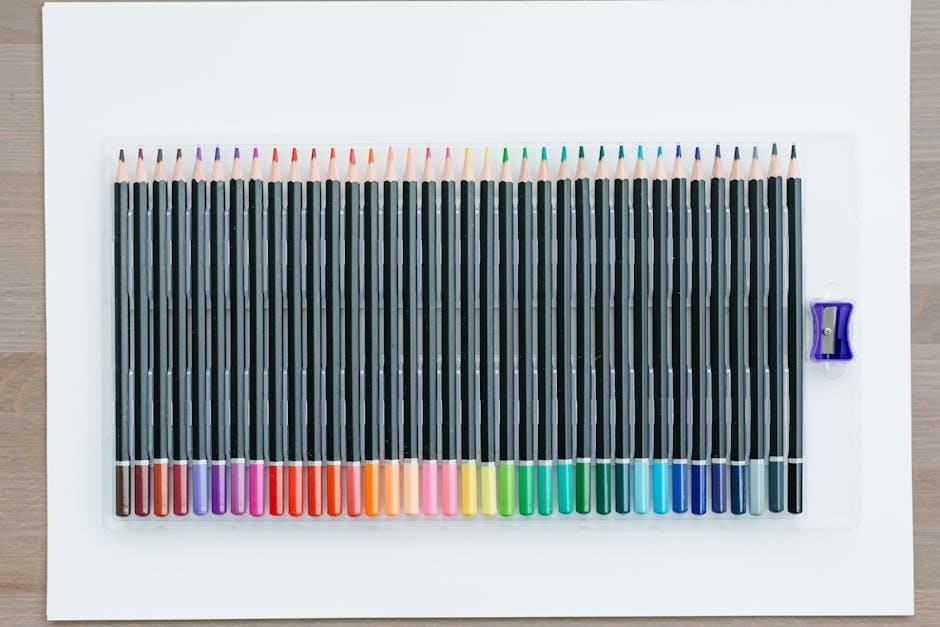
Achieving consistent sharpening relies on reliable tools; angle guides provide precision, ensuring accurate blade angles and simplifying the process for optimal results.
Angle Guides: Types & Benefits
Sharpening angle guides are invaluable tools designed to assist in maintaining a consistent blade angle during the sharpening process. They come in various forms, each offering unique advantages. Generally, these guides clamp onto the blade or attach to the sharpening stone, providing a physical reference point. This is particularly helpful for beginners struggling with freehand sharpening, but even experienced sharpeners can benefit from the increased accuracy and repeatability they offer.
The primary benefit is, of course, consistency. A consistent angle leads to a consistent edge, which translates to better performance and longer-lasting sharpness. Different types cater to different needs and budgets. Some are universal, fitting a wide range of blade shapes and sizes, while others are specifically designed for certain tools like chisels or knives. Choosing the right guide depends on the types of blades you frequently sharpen and your personal preference regarding ease of use and precision.
Magnetic Angle Guides
Magnetic angle guides represent a popular and versatile option for maintaining consistent sharpening angles. These guides typically consist of a small, adjustable platform with a strong magnet that securely attaches to the blade’s spine. The angle is adjusted by loosening a screw or mechanism, allowing you to precisely set the desired angle for your specific blade type.
A key advantage of magnetic guides is their adaptability. They work well with various blade shapes and sizes, and the magnetic hold is generally quite strong, preventing slippage during sharpening strokes. Furthermore, they are relatively compact and easy to store. However, it’s important to ensure the magnet doesn’t interfere with any electronic components within the knife handle, though this is rare. Quality magnetic guides offer excellent precision and are a great investment for both novice and experienced sharpeners.
Clip-On Angle Guides
Clip-on angle guides offer a straightforward and often more affordable solution for maintaining a consistent sharpening angle. These guides typically feature a plastic or metal body that clamps onto the blade’s spine, providing a fixed reference point during the sharpening process. They are generally easy to use, requiring minimal setup – simply clip it on, select your desired angle, and begin sharpening.
The primary benefit of clip-on guides lies in their simplicity and accessibility. They are particularly useful for beginners who are still developing their feel for the correct angle. However, some models may not accommodate all blade shapes or thicknesses, and the clamping force might not be sufficient for heavier blades. Choosing a guide with a robust clip and clear angle markings is essential for accurate and reliable results. Despite these limitations, clip-on guides remain a practical choice for many sharpening tasks.
DIY Angle Guides – Simple Solutions
For the resourceful sharpener, creating your own angle guide is a cost-effective and surprisingly accurate option. Several simple methods can yield excellent results. One popular technique involves using felt pads or pieces of sandpaper adhered to a stable base, creating a raised platform for the blade to rest upon. Adjusting the thickness of the material alters the sharpening angle.
Another approach utilizes common office supplies like binder clips and protractors to establish a consistent angle. Carefully securing the blade with the clip and referencing the protractor ensures precision. While these DIY solutions may lack the refinement of commercially produced guides, they offer a customizable and adaptable alternative. Experimentation is key to finding what works best for your tools and sharpening style, proving that effective angle control doesn’t always require expensive equipment.

Sharpening Angles for Different Blade Types
Varying blade purposes necessitate distinct angles; selecting the correct angle is vital for optimal performance, balancing sharpness with edge durability and intended use.
Kitchen Knives: 15-20 Degrees
For most kitchen knives, a 15 to 20-degree angle provides an excellent balance between sharpness and edge retention. This range is ideal for tasks like slicing, dicing, and chopping vegetables, meats, and fruits. A shallower angle, closer to 15 degrees, creates a very sharp edge, perfect for delicate slicing like tomatoes or fish, but it’s more prone to chipping.
Conversely, a 20-degree angle offers greater durability, making the blade more resistant to rolling or chipping during tougher tasks like cutting through bone or frozen food. Beginners often find 20 degrees easier to maintain consistently. Achieving this angle requires practice, but the result is a versatile edge capable of handling a wide variety of kitchen tasks efficiently. Remember to maintain consistency throughout the sharpening process for a uniform, razor-sharp edge.
Pocket Knives: 20-25 Degrees
Pocket knives generally benefit from a slightly steeper sharpening angle of 20 to 25 degrees. This increased angle enhances the blade’s robustness, crucial for handling tougher, more demanding tasks often associated with outdoor use. Unlike kitchen knives primarily used for food preparation, pocket knives frequently encounter harder materials like wood, rope, or even light prying.
A 20-degree angle offers a good compromise between sharpness and durability, while 25 degrees prioritizes edge retention and resistance to damage. Maintaining a consistent angle is vital, as pocket knife blades are often subjected to significant stress. A well-sharpened pocket knife at this angle will hold its edge longer and withstand more abuse, making it a reliable tool in various situations. Practice will help you consistently achieve and maintain this optimal angle.
Straight Razors: 25-30 Degrees
Straight razors, demanding the utmost precision, require a sharpening angle between 25 and 30 degrees. This steeper angle is essential due to the incredibly thin edge geometry characteristic of these blades. A lower angle would result in an edge too fragile for the stresses of shaving, leading to frequent chipping and rolling. The higher angle provides the necessary support for the delicate edge.
Achieving and maintaining this angle is considerably more challenging than with other blade types, often necessitating specialized honing strops after sharpening. The goal isn’t necessarily the absolute keenest edge, but rather a durable, refined edge capable of consistently delivering a close, comfortable shave. Patience and a steady hand are paramount when sharpening a straight razor at this angle, ensuring longevity and performance.
Chisels & Plane Blades: 25-30 Degrees
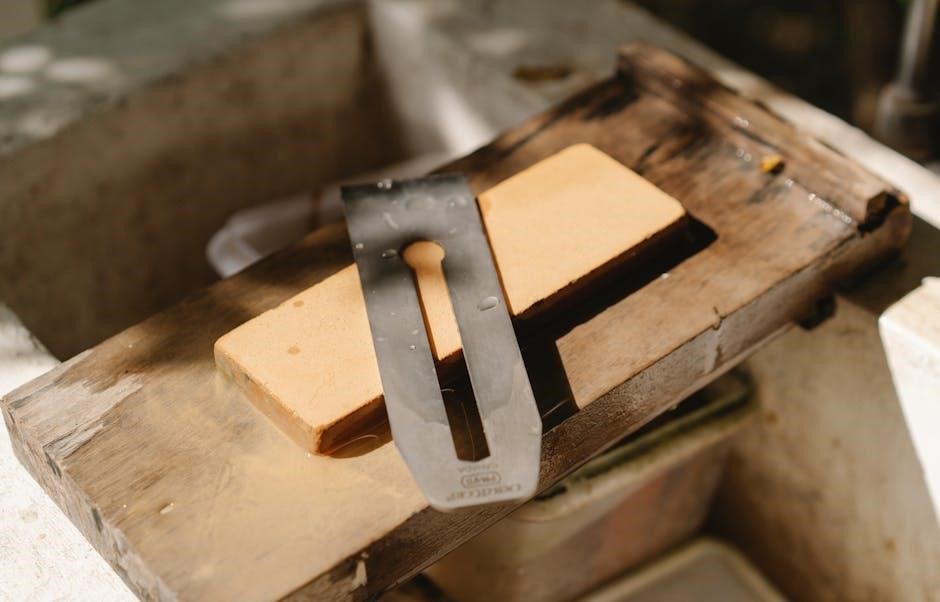
For chisels and plane blades, a sharpening angle of 25 to 30 degrees strikes a balance between sharpness and durability – crucial for woodworking tasks. These tools endure significant impact and pressure during use, demanding a robust edge that resists rolling or chipping. A shallower angle, while sharper initially, would quickly degrade under such conditions.
The specific angle within this range often depends on the intended use; finer work benefits from closer to 25 degrees, while heavier chopping tasks favor 30 degrees. Maintaining consistent angle throughout the sharpening process is vital for a uniform, effective cutting edge. Secondary bevels, sharpened at slightly steeper angles, can further enhance edge durability for demanding applications, prolonging the time between sharpenings.

The Sharpening Process – Maintaining the Angle
Consistent angle maintenance during sharpening is paramount; precise execution ensures a uniform edge, maximizing cutting performance and prolonging blade longevity.
Establishing the Initial Angle
Begin by securely positioning your blade on the sharpening stone. Visualizing the desired angle is key – imagine a line extending from the spine of the blade to the cutting edge; For most kitchen knives, this will be around 15-20 degrees. Using an angle guide initially can be incredibly helpful for developing muscle memory and ensuring consistency.
Slowly lower the blade onto the stone, focusing on maintaining that visualized angle. Avoid simply dropping the blade; a controlled descent is essential. Feel the bevel – the angled surface near the edge – making contact with the stone. Ensure the entire bevel is engaged, not just the tip or heel. Practice this motion several times without applying pressure, checking your angle with a guide or by carefully observing the contact point. A solid initial angle sets the foundation for a sharp, durable edge.
Consistent Stroke Technique
Once you’ve established the initial angle, maintaining it throughout the stroke is paramount. Apply gentle, even pressure as you draw the blade across the stone. Think of it as slicing a very thin layer off the stone’s surface. Avoid pushing too hard, as this can alter the angle and create an uneven edge.
Keep your elbow locked and use your entire arm for the motion, rather than just your wrist. This promotes stability and consistency. Maintain a consistent speed – neither too fast nor too slow. Overlap each stroke slightly to ensure the entire edge receives attention. Alternate sides with each stroke, or after a set number of strokes, to maintain symmetry. Focus on feeling the blade’s contact with the stone and adjusting your technique as needed to preserve the angle.
Checking for a Burr
A burr is a tiny, raised edge of metal that forms on the opposite side of the blade as you sharpen. Its presence indicates you’ve reached the apex – the very edge – of the blade and have successfully sharpened that side; To check for a burr, gently run your thumb across the blade’s edge, away from the cutting edge. Be extremely careful – the blade is sharp!
You should be able to feel a slight roughness or catch. If you don’t feel a burr, continue sharpening on that side, maintaining your angle and consistent stroke. Once a burr is established along the entire length of the blade, it’s time to move to the other side and repeat the process. Removing the burr is the final step in achieving a truly sharp edge, often done with stropping.

Advanced Angle Techniques
Elevate your sharpening skills with nuanced methods; freehand control and scraper utilization refine angles, unlocking superior edge quality and precise blade geometry.
Freehand Sharpening – Mastering the Feel
Freehand sharpening represents the pinnacle of blade maintenance, demanding a refined sense of touch and spatial awareness. Unlike guided systems, it relies entirely on the user’s ability to consistently hold and maintain the correct angle throughout each stroke. This technique requires significant practice, starting with slow, deliberate movements, focusing intently on visualizing the angle between the blade and the stone.
Begin by establishing a stable stance and grip, ensuring your arm movement originates from the shoulder rather than the wrist for greater control. Feel the blade ‘sit’ on the stone, and gradually increase pressure while maintaining that consistent angle. Pay attention to the sound – a uniform scratching indicates even contact.
Developing muscle memory is key; consistent repetition builds the necessary feel. Don’t be discouraged by initial inconsistencies. Regular practice, combined with careful observation of the resulting edge, will gradually refine your technique, allowing you to achieve incredibly sharp and polished results without relying on external aids. It’s a rewarding skill that offers unparalleled control.
Using Scrapers for Angle Correction
Scrapers, often overlooked, are invaluable tools for refining sharpening angles and correcting minor imperfections. Unlike abrasive stones, they remove steel mechanically, offering precise control over the edge geometry. They excel at addressing rounding or inconsistencies that may develop during sharpening, particularly with freehand methods.
Employ a scraper by holding it firmly against the blade’s shoulder, at the desired angle. Apply gentle, consistent pressure and draw it along the edge, removing small amounts of material. The key is to maintain a consistent angle throughout the scraping process, mirroring the angle you’re aiming for with your sharpening stones.
Regularly assess your progress, feeling for a crisp, defined shoulder. Scrapers are particularly effective for establishing a clean apex and removing burrs. Remember to use light pressure to avoid altering the overall blade profile drastically. They are a fantastic addition to any sharpening setup, offering a level of precision difficult to achieve with stones alone.

Troubleshooting Common Angle Issues
Identifying and correcting angle problems—like rounding or inconsistency—is vital for achieving a truly sharp edge; diagnosis and adjustment are key to success.
Rounding the Shoulder
Rounding the shoulder, or the junction where the blade meets the bevel, is a common issue indicating an inconsistent sharpening angle. This happens when pressure isn’t applied correctly, or the stroke deviates from the established angle during the sharpening process. It results in a weaker edge that dulls quickly, as the shoulder loses its defined shape and becomes rounded instead of crisp.
Visually inspect the blade; a rounded shoulder will appear less defined than a sharp, clean line. To correct this, focus on maintaining a consistent angle throughout each stroke. Reduce pressure and prioritize a smooth, controlled motion. You might need to re-establish the angle by starting with a slightly higher angle and gradually working your way down, ensuring the shoulder is reformed before proceeding to finer grits. Regular checks during sharpening will help prevent further rounding.
Inconsistent Edge

An inconsistent edge manifests as variations in sharpness along the blade’s length, often feeling sharp in some areas and dull in others. This typically arises from fluctuating the sharpening angle mid-stroke or applying uneven pressure. It’s a frustrating problem, as it compromises the blade’s overall performance and makes clean cuts difficult to achieve.
Identifying an inconsistent edge requires careful testing – try slicing through a consistent material like paper or a tomato. Uneven resistance indicates the issue. To rectify this, prioritize a deliberate, slow sharpening process. Focus intently on maintaining a constant angle and even pressure across the entire blade. Consider using an angle guide to reinforce consistency. If the inconsistency persists, a more aggressive reprofiling might be necessary to establish a uniform bevel.
Difficulty Maintaining Angle
Struggling to hold a consistent sharpening angle is a common hurdle, especially for beginners. It often results from a lack of muscle memory and spatial awareness. The blade tends to wander, leading to an uneven bevel and a less-than-sharp edge. This issue is exacerbated with longer blades or when freehand sharpening without guides.
To overcome this, start with an angle guide – even a simple clip-on version can dramatically improve consistency. Practice slow, deliberate strokes, focusing on feeling the angle rather than just seeing it. Break down the blade into sections and sharpen each individually, ensuring the angle remains constant throughout. Regular practice builds muscle memory, eventually allowing for more accurate freehand sharpening. Don’t rush the process; patience is key to mastering angle control.
Maintaining Your Sharpening Angle Guides
Proper care extends guide lifespan and accuracy; regular cleaning prevents grit buildup, while periodic calibration ensures consistent angle readings for optimal sharpening results.
Cleaning and Storage
After each sharpening session, thoroughly clean your angle guide to remove metal filings and abrasive particles. These remnants can compromise accuracy and potentially scratch your blades during future use. Warm, soapy water and a soft brush are generally sufficient for most guides. For magnetic guides, pay close attention to the areas where steel particles accumulate.
Ensure the guide is completely dry before storing it. Moisture can lead to corrosion, especially in metal components. Store your angle guide in a clean, dry place, away from extreme temperatures and humidity. A dedicated drawer or tool organizer is ideal. Avoid storing it directly on the sharpening stones, as this could transfer grit or damage the guide’s surface.
For clip-on guides, check the clamping mechanism periodically for any signs of wear or looseness. A quick wipe-down with a rust preventative can also extend its lifespan. Proper cleaning and storage are simple steps that significantly contribute to the longevity and performance of your sharpening angle guides.
Calibration Checks
Regular calibration checks are vital to ensure your sharpening angle guide maintains its accuracy over time. Even high-quality guides can drift slightly with use or accidental impacts. A simple method involves using a known angle source, like a precision protractor or a set square, to verify the guide’s setting.
Compare the guide’s indicated angle against the reference. If there’s a discrepancy, most adjustable guides allow for fine-tuning. Carefully adjust the guide until it matches the known angle. For fixed-angle guides, consider sending it back to the manufacturer for professional calibration if significant inaccuracies are detected.
Consistent calibration is especially important when sharpening critical tools or blades where precision is paramount. Performing these checks periodically – perhaps every few sharpening sessions – will help you maintain consistently sharp edges and avoid frustrating inconsistencies in your sharpening results.
Resources for Further Learning
Delving deeper into the art of sharpening requires continuous learning and exploration. Numerous online resources offer detailed tutorials, videos, and forums dedicated to blade sharpening techniques. Websites like Instructables and YouTube channels such as Murray Carter’s and Alec Steele’s provide visual demonstrations and expert advice.
For a more structured approach, consider investing in books specifically focused on knife sharpening. “The Complete Guide to Sharpening” by Harold “Hal” Silverman is a highly recommended resource. Online forums, like BladeForums, allow you to connect with experienced sharpeners, ask questions, and share your progress.
Don’t hesitate to explore manufacturer websites for specific sharpening recommendations related to their products. Continuous practice and utilizing these resources will undoubtedly elevate your sharpening skills to a professional level.